
French Onion Soup, the Mind and the Ministry of Slow Food
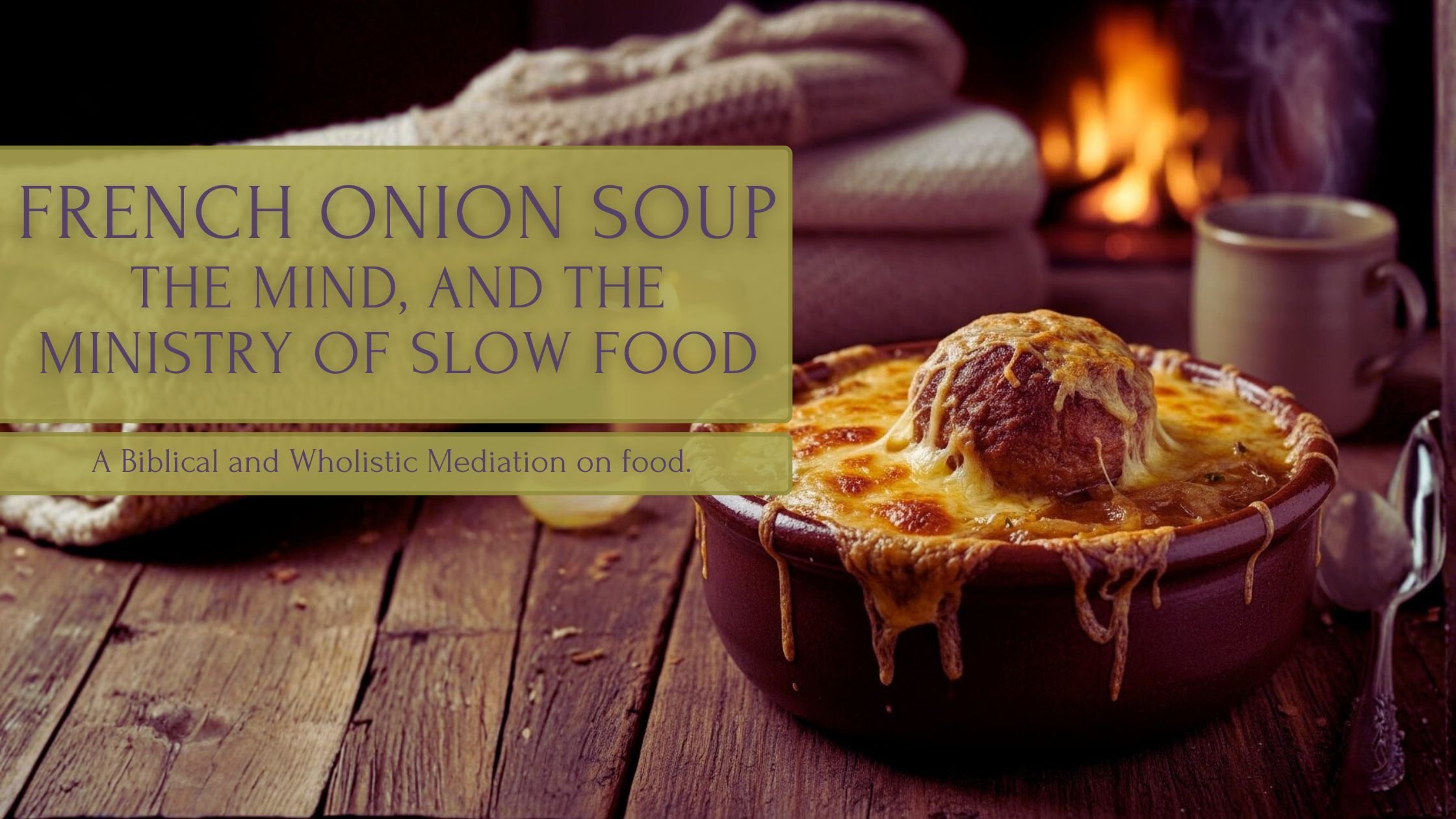
I don't know about you guys, but the cold weather this week is making me want soup! And lots of it. There is something about a warm, simmering bowl of soup that speaks comfort and love into my soul. While simple, its nourishing depth goes well beyond the surface.
But soup is more than something that fills you in a pinch. It brings comfort through memories, warmth through nourishing ingredients, and can help you beat the winter blues.
Some foods don't just feed the body — they settle the nervous system.
French onion soup is one of those dishes.
It's slow.
It's humble.
It smells like patience and tastes like care.
And from both a Biblical understanding of God's provision and a traditional nutrition perspective, that matters more than we often realize.
In a culture that prizes speed, stimulation, and efficiency, our minds and bodies are quietly yearning for nourishment that tells us we are safe, supported, and allowed to rest. Food, when prepared and eaten as it was for most of human history, has always been part of how God met those needs.
Food, Mental Health, and the Way God Designed the Body
Scripture doesn't separate the physical from the spiritual the way modern culture often does. As Scripture tells us that God knit us together in our mother's womb (Psalm 139:13), He made us into a singular being, body, mind, and spirit combined into one - only to be separated by Him.
One thing we must understand is that mental health is deeply connected to physical nourishment. This is both through the gut–brain connection, and a more spiritual caring for one another through the ministry of food.
While nutrition experts at the Weston A. Price perspective emphasize this truth by pointing us back to nutrient-dense, traditionally prepared foods — foods that calm inflammation, rebuild depleted systems, and support stable mood and cognition, Biblically, we are called to share in one another's burdens, and care for the sick.
French onion soup, when made well, is a beautiful example of this kind of genuine love and concern.
A Bowl of Soup as an Act of Care
French onion soup is not fast food. It asks for time, attention, and presence. It fills the kitchen with warmth and invites people to sit, to linger, to be together.
In that way, it mirrors Biblical hospitality and traditional nourishment — food as ministry, food as medicine, food as a reminder that we are cared for.
Think about when you were a child and stayed home from school sick. Most of us had soup. Mom, Dad, or Grandma would bring you a cup of soup and ask you to sit up and try to drink it. It felt warm on your throat, and the tenderness shared in the giving filled your heart with knowledge that you were cared for.
Different soups carry different memories for different people. For us, chicken soup was often for when you were sick, but veggie beef soup reminds me of long days on the ski slopes. Chicken and rice soup was often served at church, and "fancy restaurants" served French onion soup. You probably have your own memories of soup, and those memories bring with them so many emotions. A bowl of soup can transport you to the past, reminding you of laughs, love, and compassion.
Food is not just a necessity of life; it greatly impacts your emotional well-being. This week, as you cook, think of the first time you ate that meal. Who were you with? Who taught you how to make it? Did you ever mess it up? And one meal can bring many memories rolling through your mind. I encourage you to pause and sit with them. Be mindful, yes, of this moment, but also of the emotions and memories a dish brings to mind. Sit with those thoughts and thank God for the good times, mourn over the sad times. Dance and rejoice in celebration, or sit and grieve over the loved ones that you miss. Experience your emotions to the fullest!
Ecclesiastes reminds us that there is a time for everything, there is a time to cry and a time to laugh, a time to grieve and a time to dance! (Eccl.3:4) Our struggle is usually in knowing what time it is! And many times we fail to pause and notice where our hearts are right now. So this week, dance and celebrate, grieve and mourn. But most of all, notice what you are experiencing and give it back to God.
Soup not only brings memories and an opportunity to meditate, but also nourishes your body!
Mental health is not only about coping strategies and insight. It is also about how we live, eat, rest, and receive care — often in very ordinary ways.
Sometimes healing looks like therapy.
Sometimes it looks like prayer.
Sometimes it looks like a bowl of soup made slowly and shared generously.
This week, as I make French onion soup - yes, I will include the recipe. I am aware of how bone broth, onions, garlic, and cheese sustain and fill me. These foods give my body what it needs to heal, fight the cold, or strengthen my immune system.
Beef Bone Broth: The Nervous System's Quiet Ally
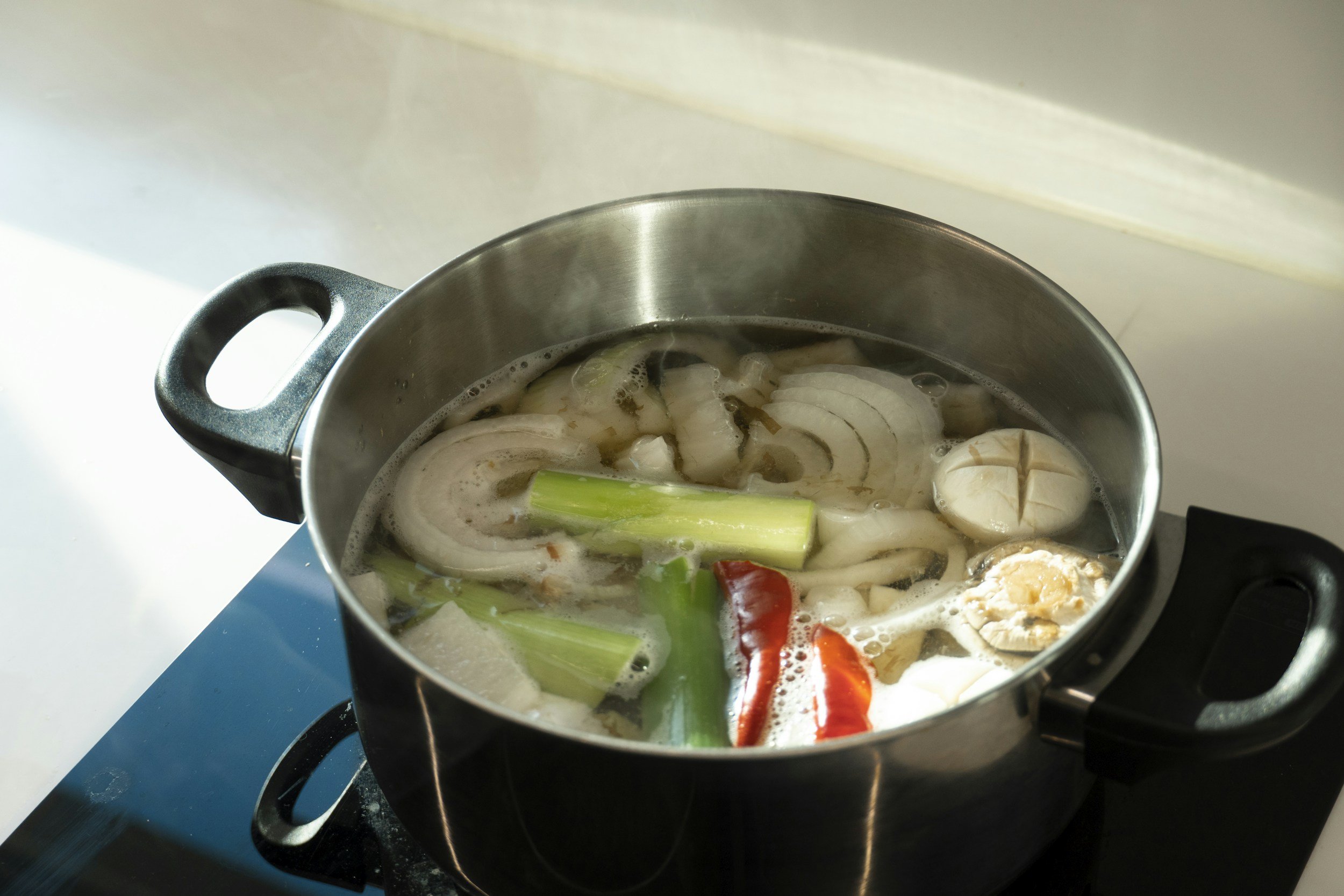
The first and possibly most important thing you need to make soup - any soup, really - is bone broth. Without broth, soup is well ... not soup!
Not all broth is the same; the quality and ingredients matter. A box of cheap broth from the store filled with MSG, sugar, and highly processed salt will not heal your body. But leftover (free) bones simmered in water for a few hours with onion, carrot, and garlic peels will fill your home with the smells of deliciousness, and give your body the nutrients it needs.
Well-made bone broth can have as much as 10-15 grams of protein per cup! (And any bowl of soup I make has at least 2 cups of broth.)
At the heart of French onion soup is a rich beef bone broth —
Bone broth is rich in:
Glycine, an amino acid that acts as a calming neurotransmitter
Gelatin and collagen, which support gut lining integrity
Minerals in forms that the body easily absorbs
From a mental health perspective, this matters.
Glycine has been shown to support relaxation, sleep quality, and stress regulation. A nourished gut lining reduces inflammatory signaling that can worsen anxiety, depression, and brain fog. Many people notice that meals rich in broth feel grounding — not heavy, not stimulating, but steady.
This is the kind of nourishment that whispers to the body: you can exhale now.
Protein, minerals, and other nutrients can have a significant impact on your mental health. See this article published by Mental Health Connecticut for more on protein and mental health.
Onions: More Than Comfort Food
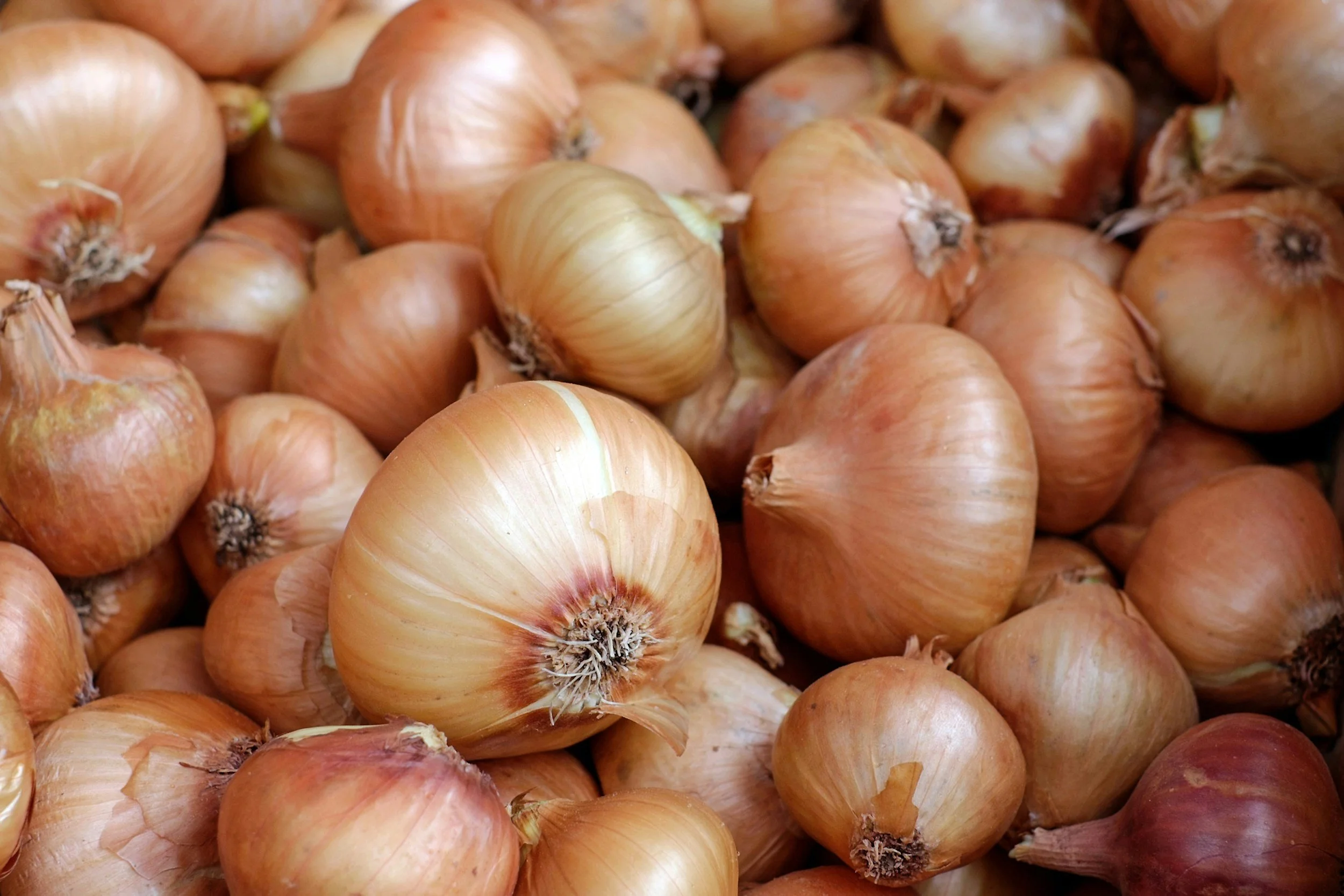
Onions are something of a controversy. Either you love them, or you hate them. And in my mind, if you hate them, you haven't had them well caramelized! Yes, they may make you cry when you cut them, but oh, are they yummy! And while some would say if you hate onions, you simply shouldn't make this soup, I disagree. My husband (before he was my husband) failed to tell me he didn't like onions, and the first time I cooked for him, I made, you guessed it, French onion soup! And now he loves them - maybe not raw, but cooked, yes! So if you're not so sure about onions, this recipe may just change your mind!
Onions are often thought of as a flavor base, but they are powerful allies for both physical and mental health.
They are rich in:
Prebiotic fibers, which feed beneficial gut bacteria
Flavonoids like quercetin, which help reduce inflammation
B-vitamins, which support nervous system function
The gut and brain are in constant conversation. When the gut microbiome is supported, the brain receives clearer signals. Mood regulation, stress tolerance, and emotional resilience all depend — in part — on this relationship.
There is something quietly fitting about onions requiring time and patience to caramelize. They cannot be rushed without becoming bitter. They soften slowly, becoming sweet and nourishing — a metaphor many of us could use.
Salt: More Than a Seasoning — a Signal of Wholeness
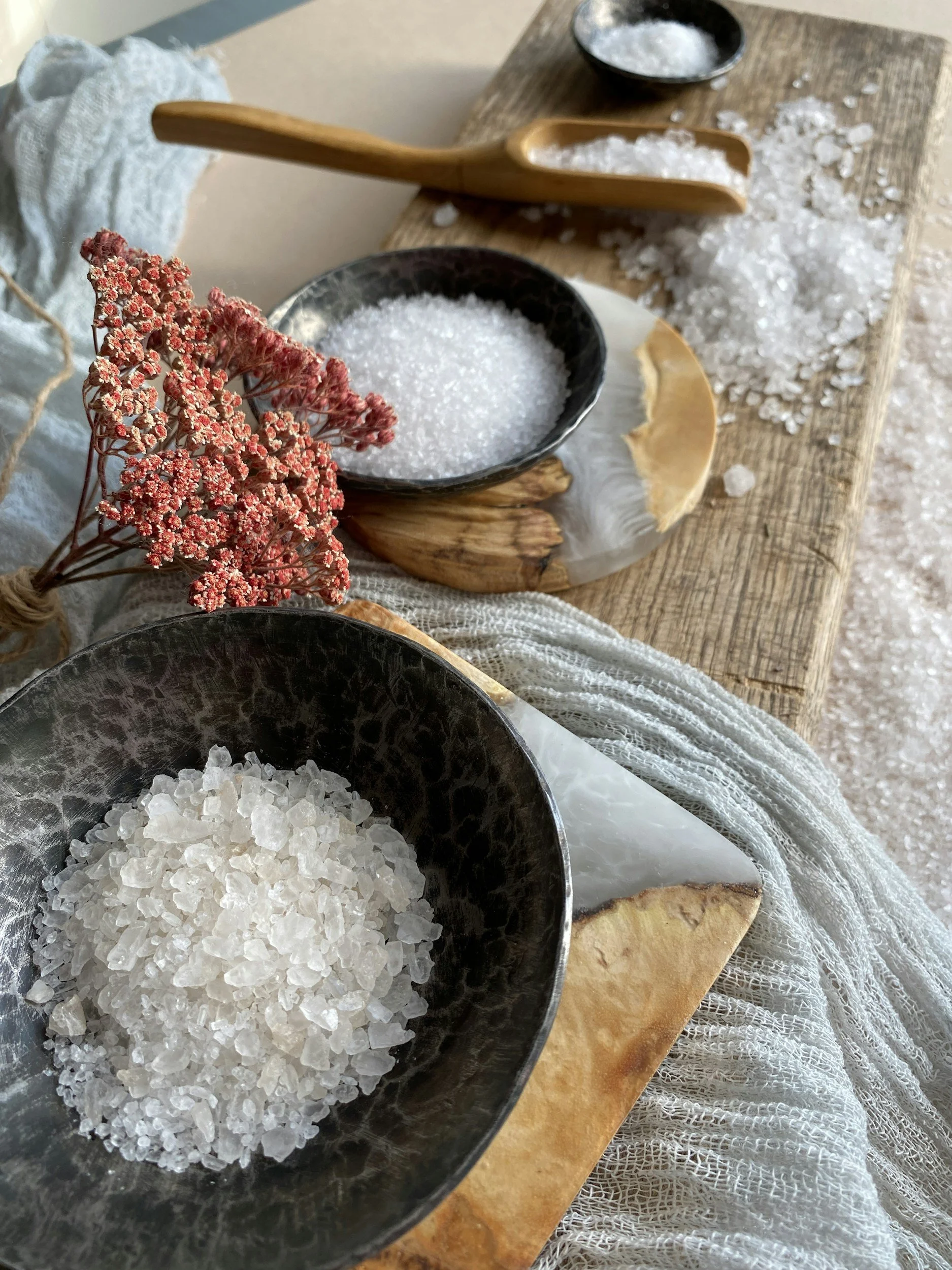
Yes, this recipe calls for a good deal of salt, but keep in mind that cooking from scratch means no one else has salted anything! Salt is not bad for you - in fact, you need it! But you need it in balance, and the right kind!
Salt is one of the oldest and most essential ingredients in human cooking. In French onion soup, it does more than enhance flavor — it brings the dish into balance. Traditional cooking paid attention not just to how much salt was used, but what kind. Highly processed table salt is stripped of naturally occurring minerals and often treated with additives to improve shelf stability. In contrast, minimally processed, mineral-rich salts are closer to their natural state and tend to integrate more gently into food. The source of salt matters because the body responds not only to sodium itself, but to the overall context in which it is consumed. Thoughtfully sourced salt helps the meal feel complete, grounding rather than jarring.
How salt supports the body and mind:
Nervous system signaling
Fluid and hydration balance
Adrenal and stress regulation
Digestive readiness
Satiety and satisfaction
Salt supports the body's sense of balance and safety. When that balance is disrupted, emotional regulation often becomes harder as well.
Garlic: Small, Potent, and Protective
Garlic, strong enough that I will let you decide how much to put in, but delicious enough that I will warn you it won't be as good if you leave it out. Garlic brings depth to French onion soup, but it also brings protection.
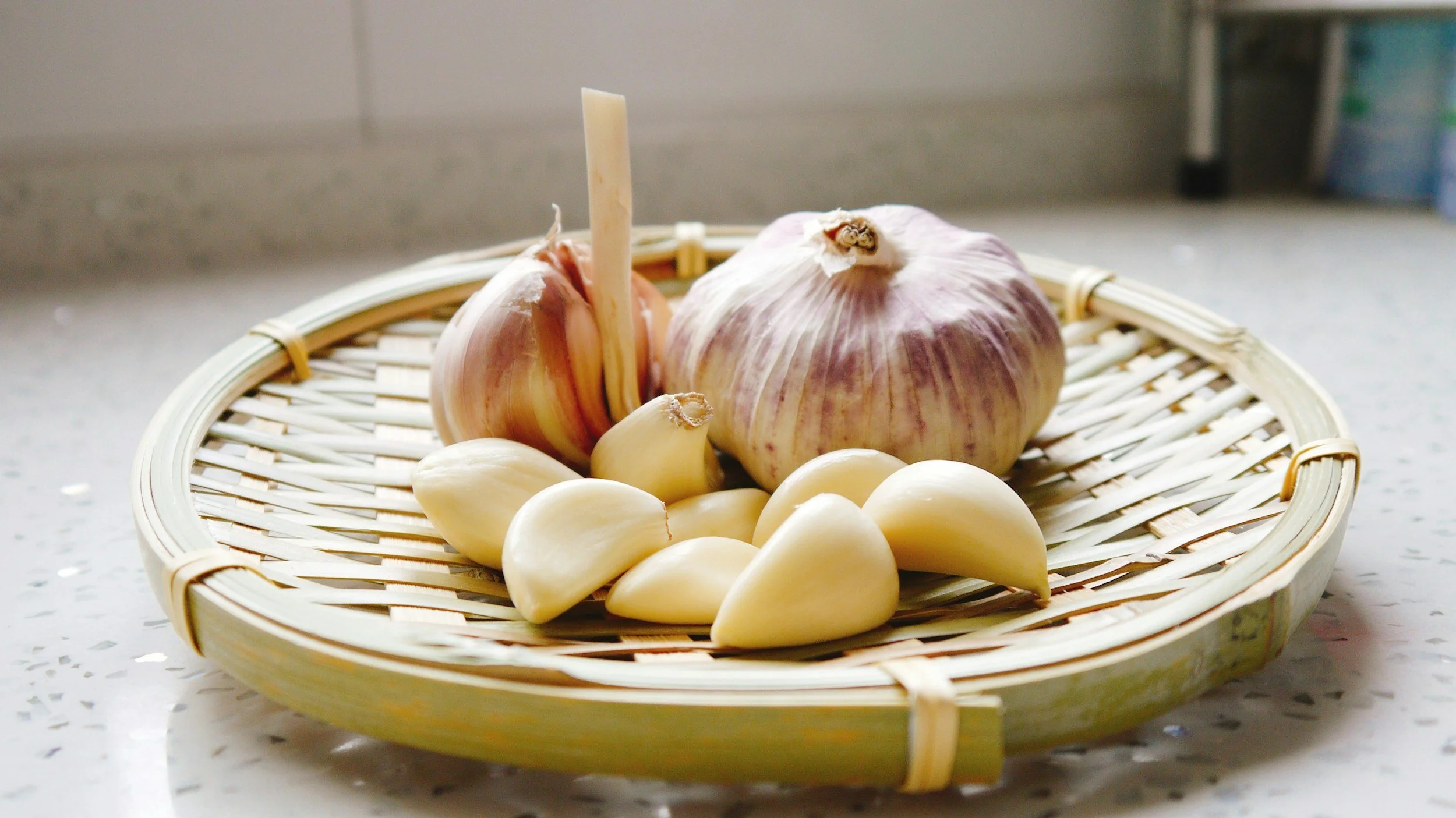
Traditionally valued across cultures, garlic supports:
Immune function
Reduced inflammation
Healthy circulation
Microbial balance in the gut
From a mental health lens, garlic's antioxidant and anti-inflammatory properties may help protect the brain from oxidative stress — a contributor to cognitive decline and mood disorders.
Like much of traditional food wisdom, garlic reminds us that small, consistent nourishment matters.
Meatballs: Turning Soup Into a Meal That Holds You

While meatballs aren't part of traditional French onion soup, adding them transforms the dish from a starter into a true meal. Soup isn't just an appetizer if you fill it with protein and veggies! The recipe I adapted this from called for "fancy meatballs" filled with caramelized onions and cheese, but for my taste, I prefer a simple, easy-to-make meatball that fills me and doesn't have all the fuss.
For many people — especially those navigating anxiety, blood sugar instability, or chronic stress — soup alone can feel comforting but incomplete. Meatballs bring substance. They anchor the meal, providing the kind of nourishment that allows the body to settle rather than search for more. In this way, meatballs aren't a departure from tradition so much as an adaptation to modern needs: helping a familiar comfort food actually sustain the whole person.
Meatballs support the body and mind through:
Complete protein for steady energy
Blood sugar stability
Sustained satiety
Neurotransmitter building blocks
A sense of being "fed enough"
When the body feels adequately nourished, the mind is more free to rest, reflect, and engage — rather than remain preoccupied with what's missing.
So add a huge meatball to your soup, or three small ones, and use your soppon to break it open! Scoop up some cheese and meat, and broth, and let the warming goodness fill you!
Cheese: Comfort, Protein, and Neurotransmitter Support
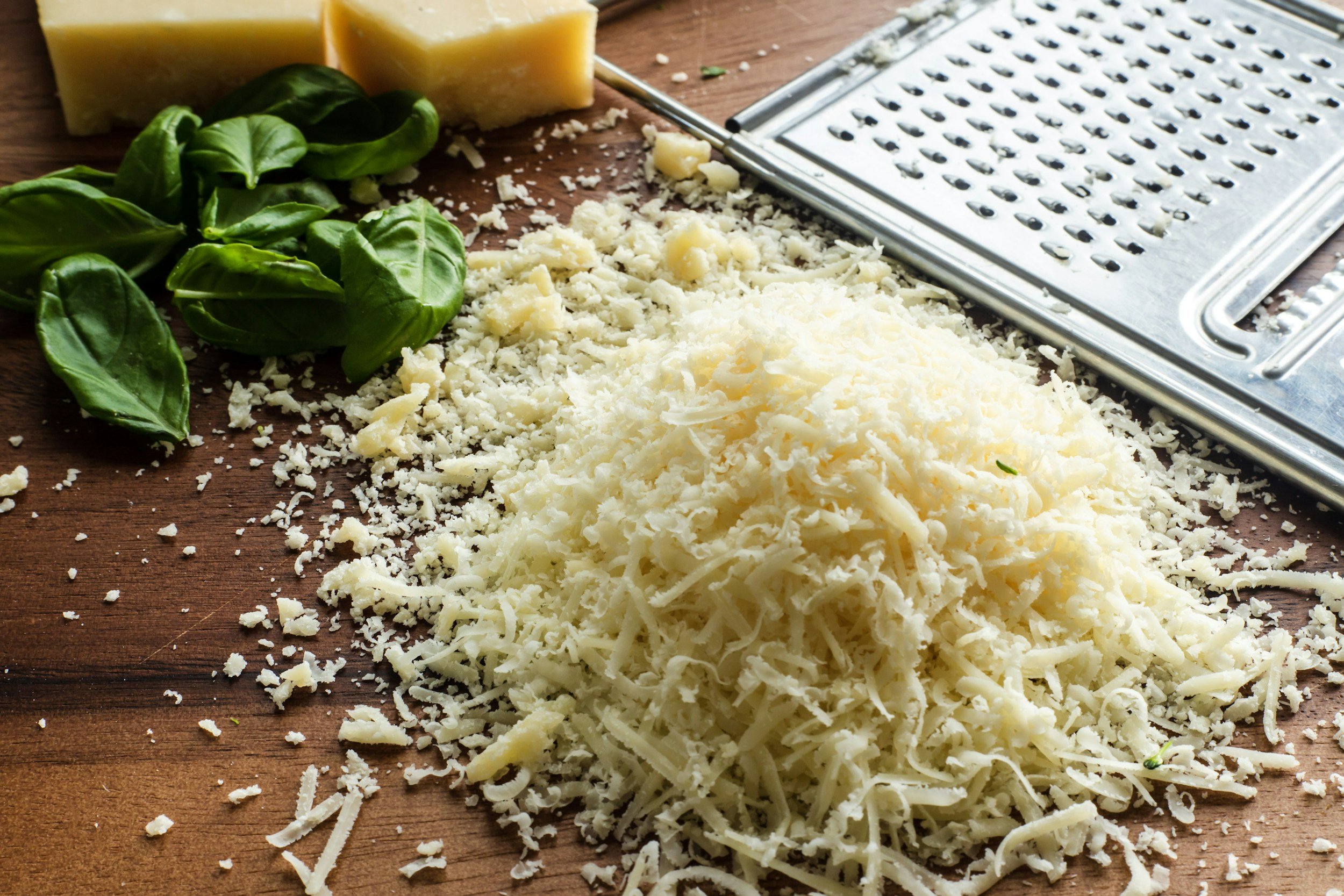
Yummy! That final layer of bubbling, melted cheese is not just indulgent — it's functional nourishment. And come on, who doesn't love cheese! We use mozzarella or the pre-shredded 5-cheese Italian blend, but use whatever cheese you like!
Traditional cheeses provide:
Complete proteins with essential amino acids
Vitamin B12 is critical for mood and cognitive clarity
Tryptophan, a precursor to serotonin
In some cases, beneficial bacteria from fermentation
Cheese, when consumed as part of a balanced, whole-food meal, it contributes to satiety, pleasure, and emotional regulation.
Joy matters in nourishment, too.
And for those of you who can't have dairy/ cheese: I feel for you! But I'm sure you know what's best for your body. Feel free to leave it out, or replace it with whatever cheese or topping works for you!
Soup: a sign of love, care, and concern
So as you eat this soup - or any other - I hope and pray that you feel the love of a heavenly father who knows what you need. I’m sure that many of you - like me- didn’t know the science behind what a bowl of soup can do for you. But if we pause and notice, most of us know that a bowl of soup, whether delivered to our bedside by a loved one or dropped off at the door by a friend, fills our hearts with love and knowledge that we are cared for. So fix this soup for yourself, or for a friend. Share the love of a good God who provides all that we need in simpler ways than we often see.
My Nourishing French Onion Soup Recipe
This is the French onion soup I make when I want something deeply nourishing — for the body, the mind, and the soul. It follows traditional principles, uses real ingredients, and tastes like something meant to be savored.
Ingredients:
(as always, measure with your heart)
2 tbsp. Butter
2 cloves of garlic
6 medium Onions sliced
Beef Broth (https://www.farmhouseonboone.com/make-bone-broth-in-the-instant-pot/)
meatballs
1 lb hamburger
1 egg
1 cup (ish) breadcrumbs / crushed crackers/ bran
to taste: Salt, Pepper, Italian seasoning
Mozzarella cheese ( for topping)
Instructions:
In your Dutch oven or large pot, place butter ( or oil/ beef tallow/fat), garlic, and onions. Cook over medium heat until the onions are caramelized. You want them not to burn but to get dark and just barely begin to stick. Pour in your bone broth and let it simmer. Optional add-ins are: bay leaf, red wine, thyme (depending on your flavor preferences)
To make your meatballs, you have to get your hands dirty. In a bowl, put all the ingredients and squash them together. Determine how many meatballs you want and roll them out. You can cook them in the oven at 350 until done, or you can put them directly into your soup and bring it to a boil for 30 minutes, or until cooked through.
Ladle your soup into bowls and top with cheese.
Enjoy slowly and with friends!
